
July 20, 2026
Press Releases San Diego CACatalina Express Awards Marine Group Boat Works $30 Million Contract to Build Next Generation Low-Emissions 524-Seat Passenger Ferry
Low-Emissions Vessel Program Partnership of Los Angeles Marine Emission Reduction (LA MER), including the Port of Los Angeles and California Air Resources Board (CARB) is Expected to Support More Than 100 Jobs Across California’s Maritime Economy
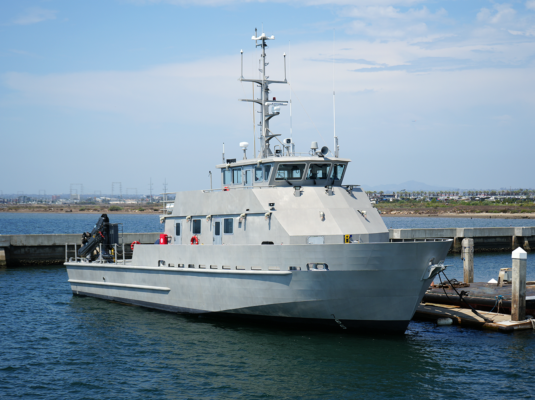
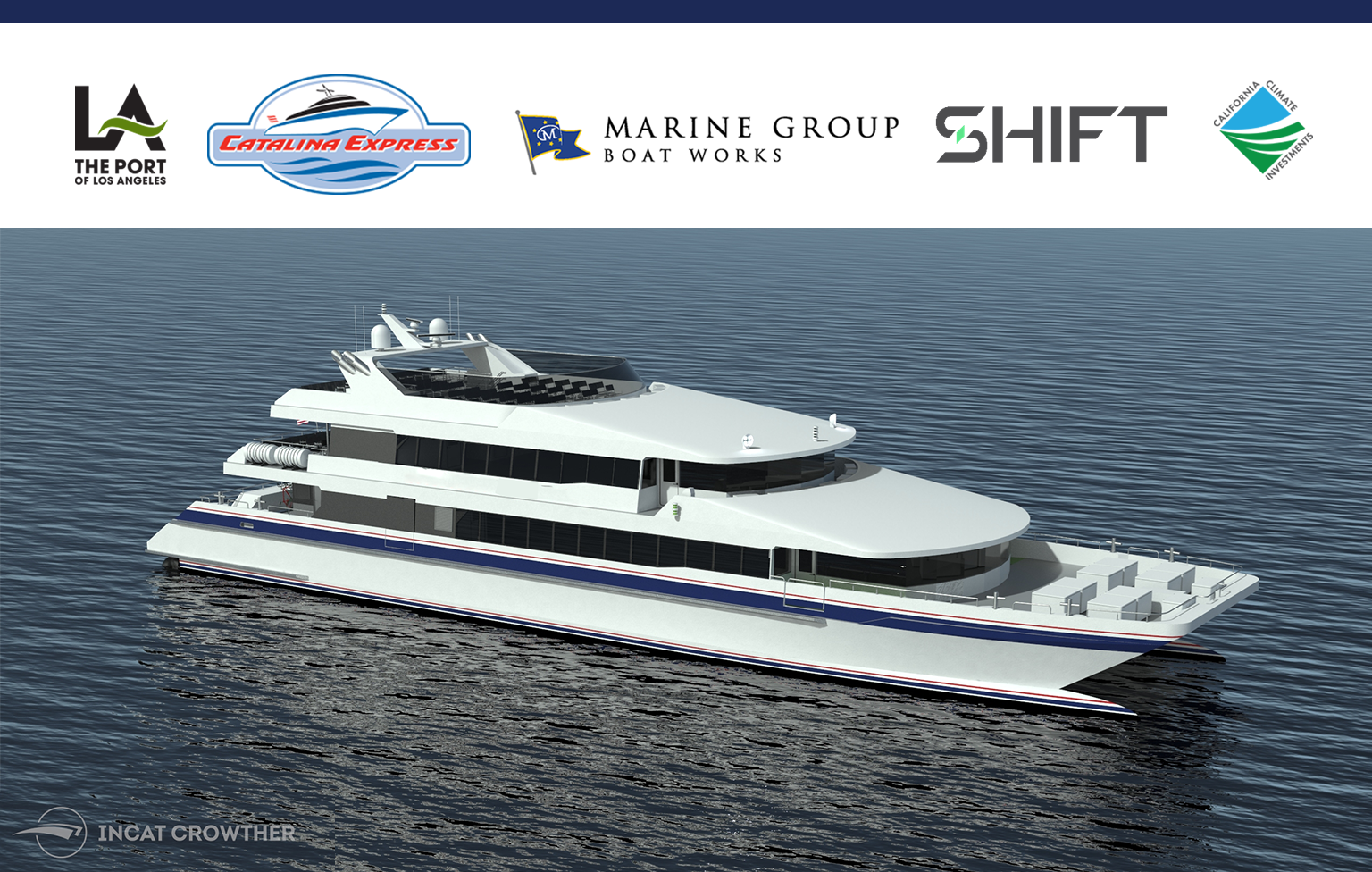
San Diego (July 20, 2026) – Marine Group Boat Works (MGBW), a boatbuilding and repair company operating a shipyard in Chula Vista, Calif., has been selected to begin construction of a new low-emissions passenger ferry for Catalina Express. This cutting-edge vessel will meet the requirements of the California Air Resources Board (CARB) Commercial Harbor Craft Regulation, advancing the state’s commitment to cleaner maritime transportation, while adding significant economic impact to the community. The vessel is expected to be launched and begin sea trials in the third quarter of 2027.
Catalina Express is part of the LA MER (Los Angeles Marine Emission Reduction) project, a collaborative initiative between CARB and the Port of Los Angeles. Backed by a $31 million CARB grant, the project aims to accelerate the adoption of lower emission harbor craft across California. As part of this effort, Catalina Express received a $15 million grant to match its own $15 million contribution to the project. This emission-reducing technology demonstration project aligns with Catalina Express’ and MGBW’s dedication to environmental consciousness and revitalizing the California boatbuilding industry.
The new 46-meter Catalina ferry, designed by Incat Crowther, will be equipped with four Tier 4 MTU 12V 4000M65L engines and a proposed CARB-verified diesel particulate filter once certified by the EPA, USCG, and CARB to meet CARB commercial harbor craft regulations. This state-of-the-art vessel represents the latest chapter in Catalina Express’s long-standing commitment safe, efficient, and comfortable travel. The company was founded in 1981 by Greg Bombard, his father Doug Bombard, and partner Tom Rutter to meet the growing need for reliable transportation between Southern California and Catalina Island. What began with a single 60-passenger vessel has grown into a robust fleet of eight vessels transporting more than one million passengers annually.
“For over 45 years, Catalina Express has been committed to environmentally conscious operations, consistently meeting or exceeding federal and state emissions standards,” said Greg Bombard, president and CEO of Catalina Express. “We’re proud to be part of the LA MER program and grateful for the opportunity to collaborate with MGBW Shipyard on this next-generation vessel. It’s an exciting step forward in our legacy of innovation and service to the Catalina Island community.”
Catalina Express is the primary link between the Southern California mainland and Catalina Island, making sustainable transportation a critical priority. The introduction of this new 524-passenger vessel will streamline operations by replacing three Tier 2 and Tier 3 vessels, enhancing service efficiency while also cutting down on environmental impact.
“Projects like this demonstrate how environmental innovation and economic opportunity can go hand in hand,” said Port of Los Angeles Executive Director Gene Seroka. “We’re proud to work with Greg Bombard and the Catalina Express team, along with the California Air Resources Board and Marine Group Boat Works to advance cleaner maritime technology while supporting skilled jobs and strengthening California’s shipbuilding industry.”
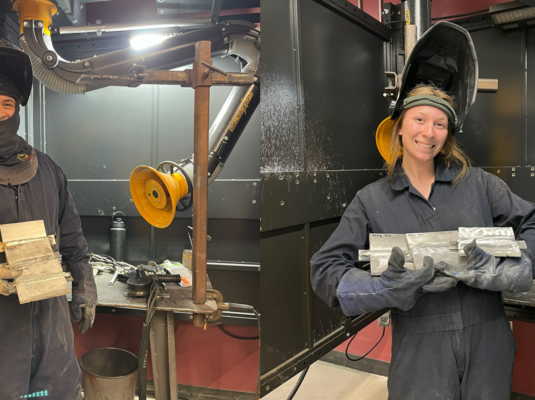
The new vessel construction represents a significant investment in Southern California’s maritime economy and workforce. The project will generate more than 100 full-time jobs for craftsmen, engineers, production personnel and support staff throughout construction. In addition to the direct employment impact, the project strengthens the regional supply chain through the purchase of more than 200,000 pounds of locally sourced aluminum and over 880 feet of piping materials. Using standard MARAD maritime industry economic multipliers, the project is estimated to generate more than $54 million in total regional economic impact.
“This program demonstrates that shipbuilding is far more than vessel construction — it is a powerful economic engine that sustains California’s maritime industrial base, creates skilled trade careers, and supports local businesses throughout the regional supply chain,” said Todd Roberts, CEO of Marine Group Boat Works. “Projects like this keep critical maritime craftsmanship and manufacturing capabilities here in California while delivering long-term economic value to the community.”
About Catalina Island and Catalina Express
Located 22 miles off the coast of Southern California, Catalina Island is accessible by boat from three ports via Catalina Express: San Pedro, Long Beach and Dana Point. Catalina Express offers up to 30 daily departures and year-round service to Avalon and Two Harbors, transporting nearly one million passengers annually. It offers comfortable airline-style seats and a galley with a full bar and light snacks. Traveling to Catalina Island in as little as one hour, each vessel was designed and built/purchased specifically for comfort and speed. Catalina Express is an unparalleled resource in Southern California, and one of the world’s most respected ferry fleets. For information and reservations, call 800-429-4601, or visit Catalina Express.
About Marine Group Boat Works
Marine Group Boat Works is a full-service maritime vessel construction and repair company with two waterfront facilities, on San Diego Bay and in Los Cabos, Mexico. Its largest shipyard in Chula Vista, Calif., encompasses one million square feet, with over 2,000 feet of dockage and a new 820-ton lift, rough terrain cranes, a machine shop, metal working equipment and a propeller shop. Its sister boatyard in San Jose del Cabo features over 300,000 square feet of land and water, with a 660-ton, 150-ton and 75-ton Travelift. Between the two facilities, MGBW employs over 210 ABS-certified welders, shipfitters, pipefitters, mechanics, electricians, painters and other boatbuilding and repair specialists. For more information, visit www.marinegroupboatworks.com.
About the Sustainable Heavy-Duty Initiatives for Future Technology (SHIFT) Program
SHIFT is an incentive program administered by the California Air Resources Board (CARB) supporting the development and demonstration of advanced, low- and zero-emission technologies for heavy-duty vehicles, off-road equipment, and goods movement. Formerly known as Advanced Technology Demonstration and Pilot Projects, SHIFT investments help accelerate the transition of emerging technologies from pre-commercial demonstration to commercial deployment by supporting early deployments and at-scale testing in real-world use. As a part of CARB’s Clean Transportation Incentives, SHIFT projects advance innovative on- and off-road solutions that reduce air pollution, improve public health and support California’s climate and air quality goals.
About the California Air Resources Board (CARB)
This project is part of Sustainable Heavy-Duty Initiatives for Future Technology (SHIFT), a program administered by the California Air Resources board and funded through California Climate Investments. CARB’s mission is to promote and protect public health, welfare, and ecological resources through effective reduction of air pollutants while recognizing and considering effects on the economy. CARB is the lead agency for climate change programs and oversees all air pollution control efforts in California to attain and maintain health-based air quality standards
About CCI
LA MER is part of California Climate Investments, which uses billions of Cap-and-Invest dollars to fund projects that reduce harmful emissions, protect public health, strengthen local economies, and support natural environments. With a strong focus on communities most impacted by pollution and limited access to resources, California Climate Investments helps build a more equitable and sustainable future.